© The Dabney Nursery
Plant: Southern Living® Fire Chief - Arborvitae
Arborvitae · Thuja occidentalis 'Fire Chief'
Size: 3 gal
Light
Mature size
More about this plant
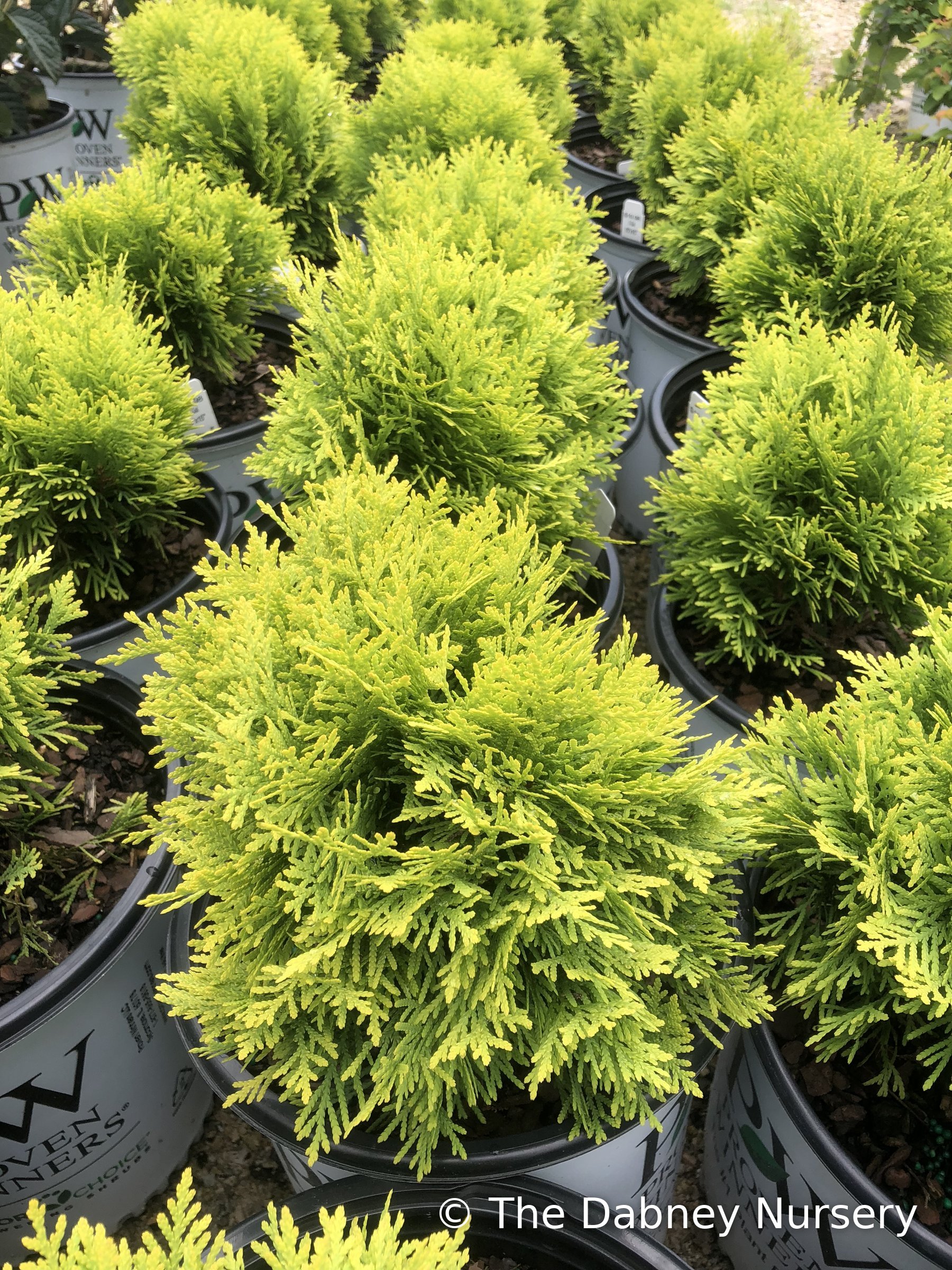
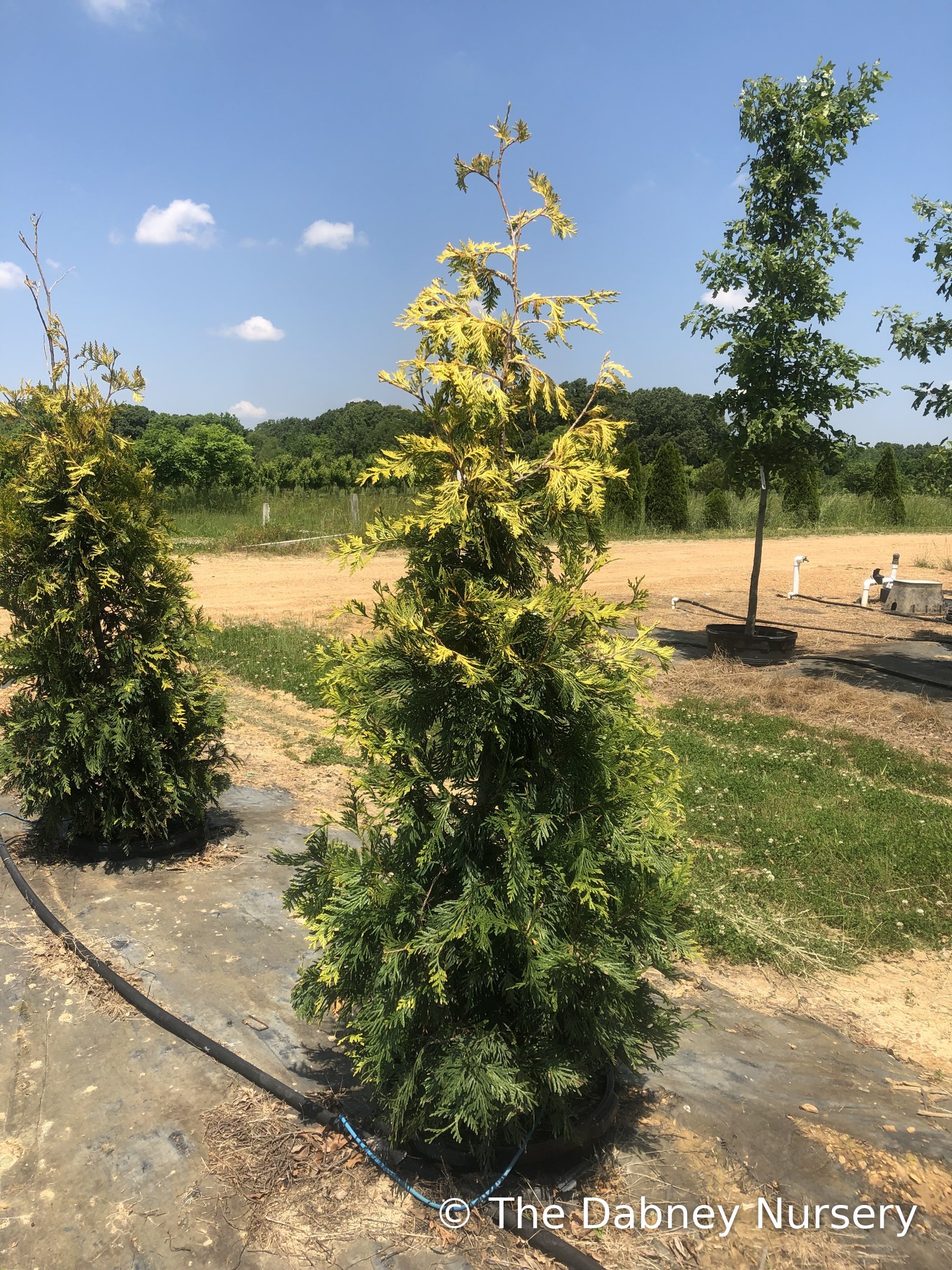
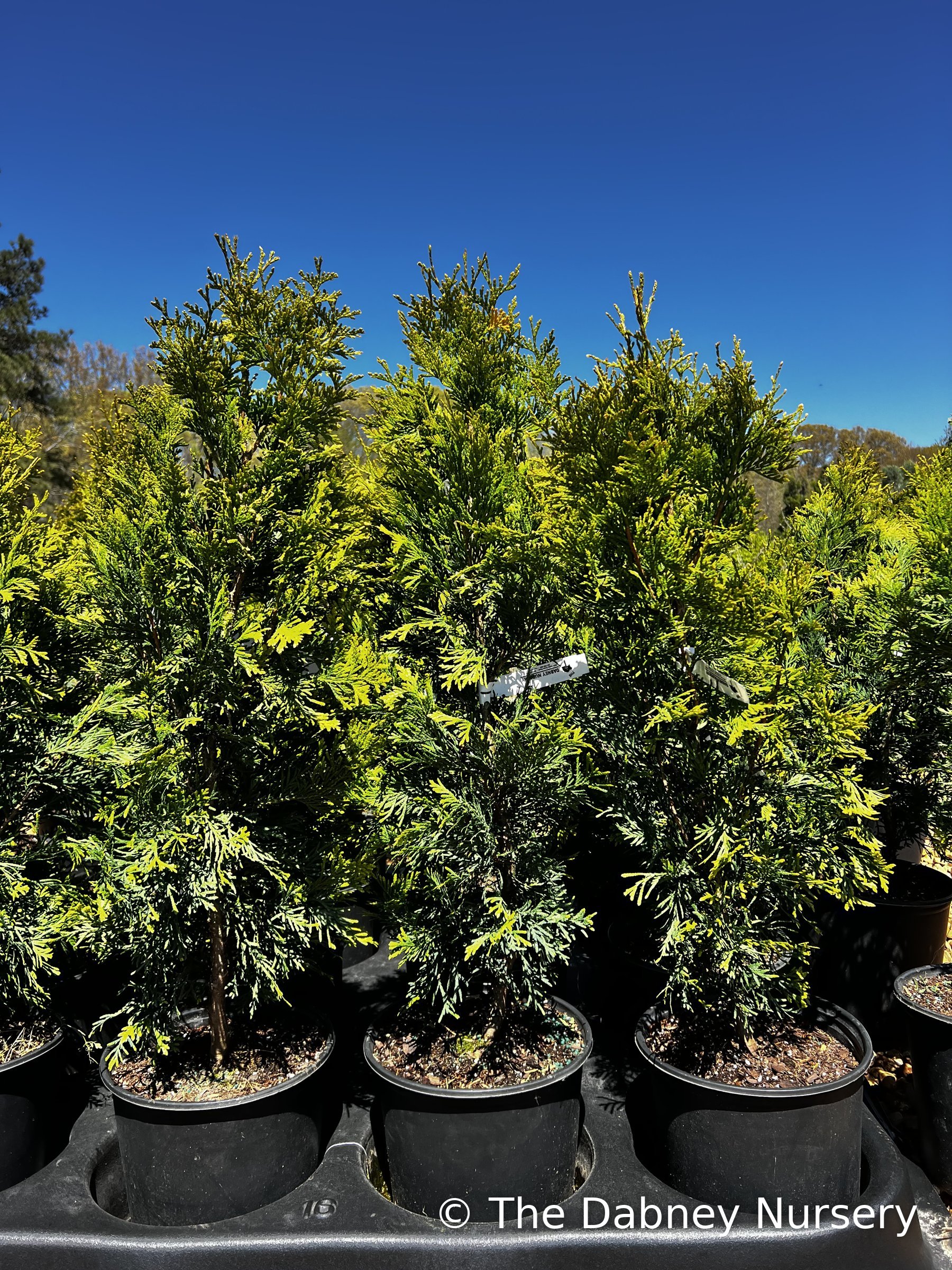
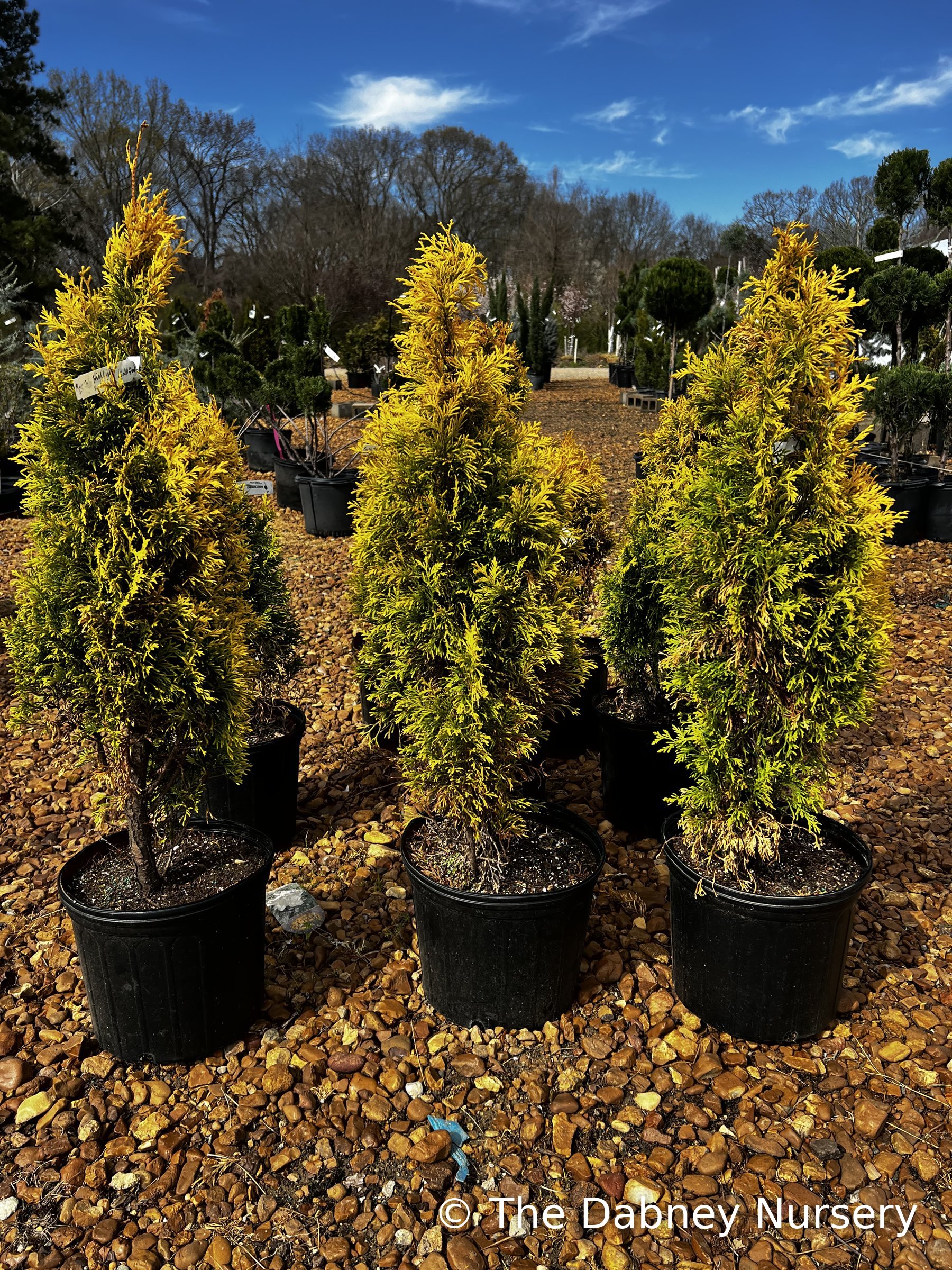
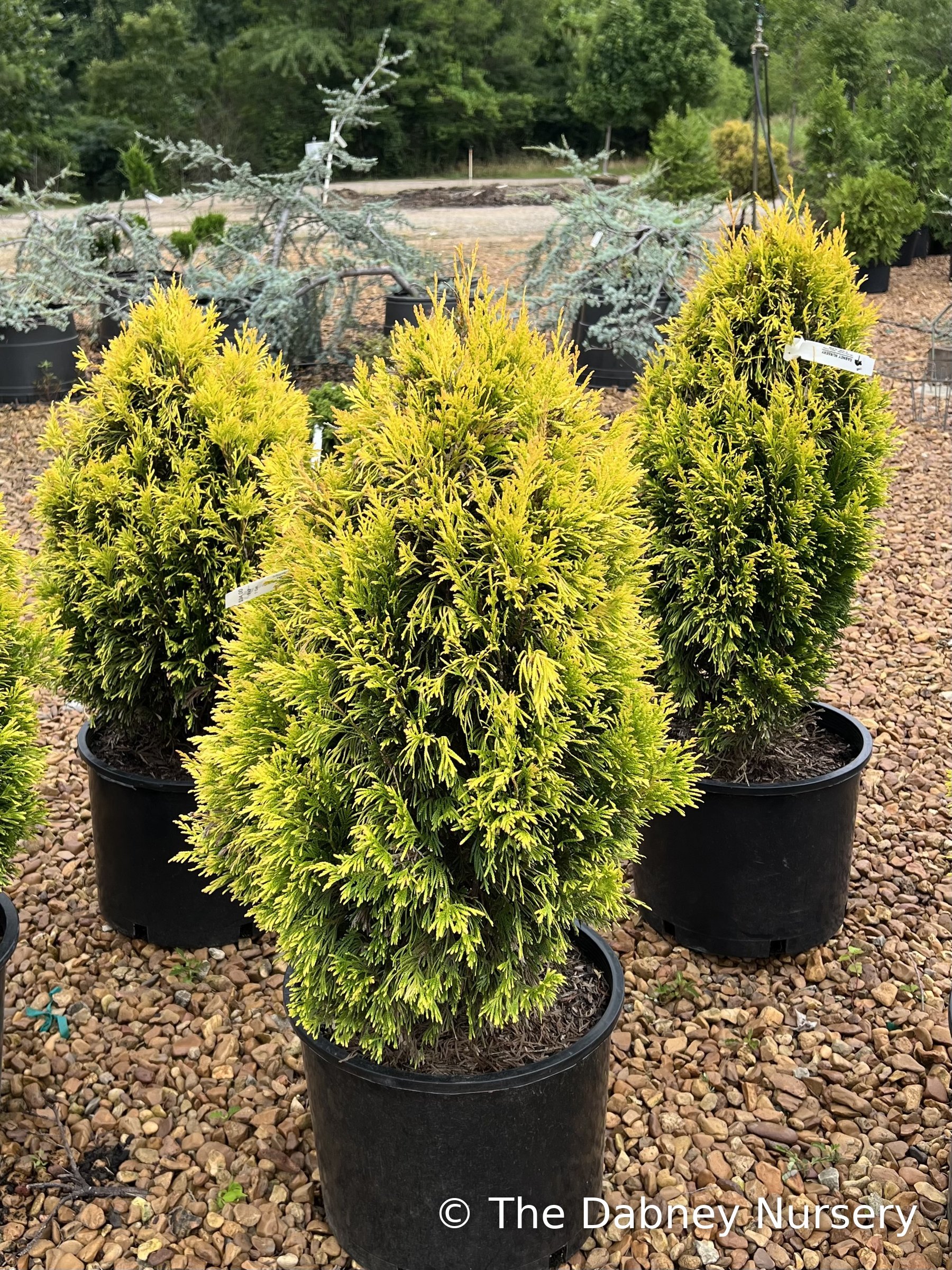
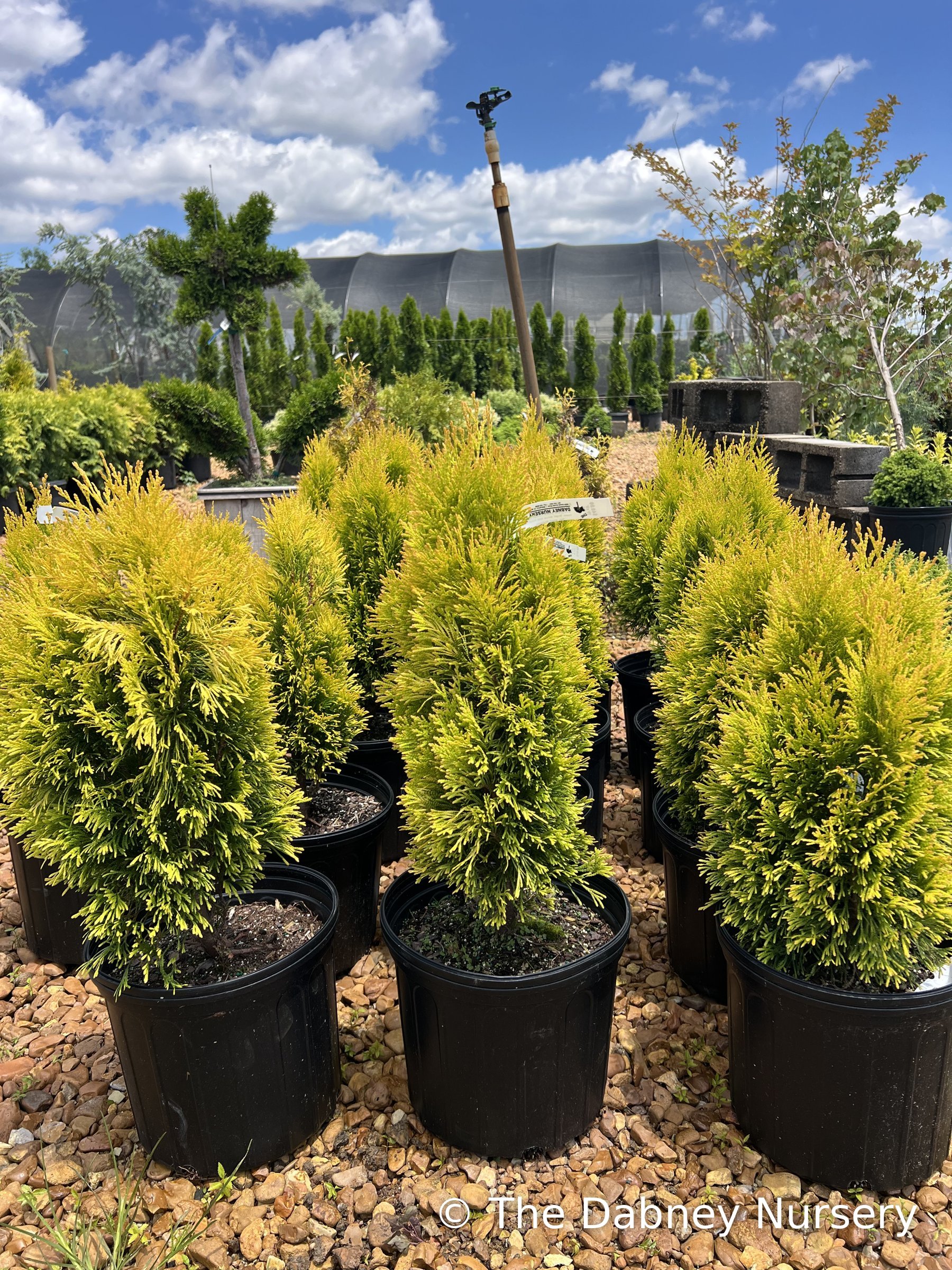
Fire Chief is a compact arborvitae with a naturally tidy, globe-shaped form and color that shifts through the seasons. New growth emerges bright gold in spring, warms to orange in summer, and deepens to red in fall, with good color through winter.
It keeps its rounded shape without pruning. It also tolerates sun and wind burn well, which makes it a low-maintenance evergreen for year-round structure.
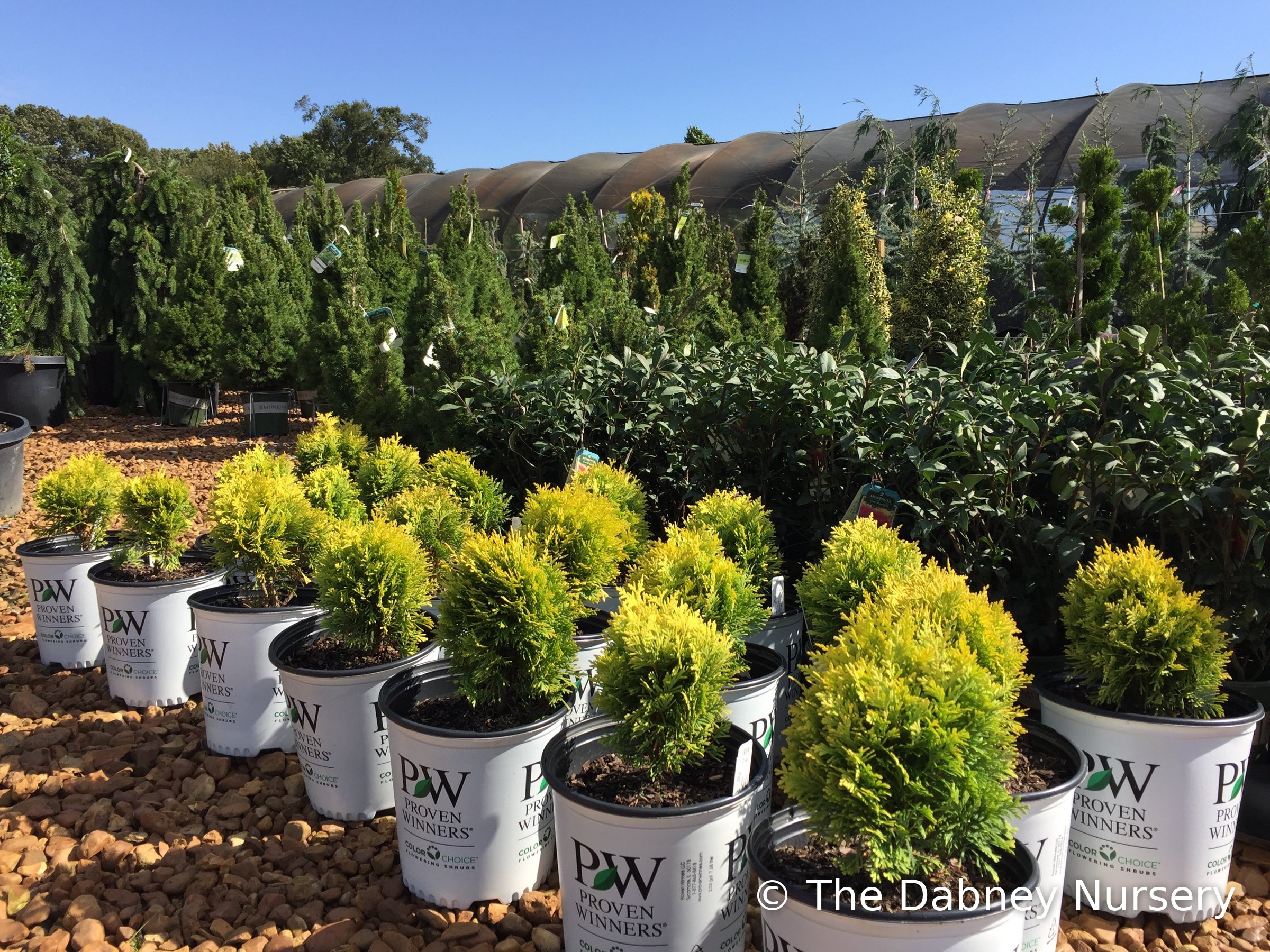
At 2–4 ft tall and wide, Fire Chief fits easily into foundation beds, mixed borders, and courtyards. Plant one as a specimen, group several for repeating color through a border, or line a path with a series of soft globes. In a container, a single plant gives porches and patios four-season interest. Its warm tones also stand out against darker evergreens and blue-green conifers.
- Full Sun
- Grows to 25 ft tall and 12 ft wide
- Hardy in USDA zones 3-7
- Evergreen foliage
- Native plant
Plant description
Fire Chief is a compact arborvitae with a naturally tidy, globe-shaped form and color that shifts through the seasons. New growth emerges bright gold in spring, warms to orange in summer, and deepens to red in fall, with good color through winter.
It keeps its rounded shape without pruning. It also tolerates sun and wind burn well, which makes it a low-maintenance evergreen for year-round structure.
At 2–4 ft tall and wide, Fire Chief fits easily into foundation beds, mixed borders, and courtyards. Plant one as a specimen, group several for repeating color through a border, or line a path with a series of soft globes. In a container, a single plant gives porches and patios four-season interest. Its warm tones also stand out against darker evergreens and blue-green conifers.
- Foliage
- Scale-like in adults, ovate, obtuse to bluntly acute, yellowish green to grayish green below.
- Fruit
- The cone is oblong and light brown and measures 1/3 to 1/2 inches long.
- Bark & stems
- The attractive grayish brown to reddish-brown bark has shallow furrows.
- Native range
- Central & E. Canada to N. Central and Eastern North America